Sunday, March 23, 2008

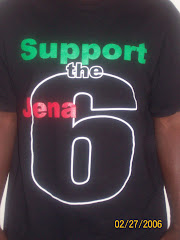
March Update on the Jena Six

There's an absolute dearth of information on the Jena 6 these days, but I'm still working sources to find out the latest.

Abby Brown of TheTownTalk.com informs me that the March 24th trial of Braynt Purvis is not happening.
    She states that:

    "None of the Jena Six defendants have trial dates yet. The next hearing is May 6 and it is change of venue motion hearing for 3 of the defendants and the DA has also presented a motion to use Purvis' Texas arrest in the Jena Six case."

I will be contacting more sources about other facets of the Jena 6 in the coming days, and will report back when I have other information.

Thursday, March 20, 2008

Louisiana Case Overturned by Supreme Court Due To Racial Bias

The Supreme Court decided in a 7 – 2 vote yesterday to overturn the conviction of a Black man tried in Jefferson County Louisiana, on the grounds that potential Black jurors were dismissed based on their race.

This case of racial discrimination in the jury selection in Louisiana highlights the very problem with an all white jury in the Michael Bell trial. All white juries may be appealed to on the basis of racial bias, as happened in this case; where such a tactic that has no place in the law, is not likely to succeed when a member of the racial minority is on the jury. Then, you actually have to argue the facts of the case.

At the very least jury's should not be gerryrigged to exclude certain races. It's illegal and violates democracy and justice.

Antonin Scalia and his lapdog Clarence Thomas are the only two justices to vote against overturning Snyder’s conviction.


Supreme Court overturns death penalty in Louisiana case
By James Oliphant | Washington Bureau
March 20, 2008

WASHINGTON — The Supreme Court on Wednesday overturned the guilty verdict and death sentence of a Louisiana man convicted of hacking his wife's lover to death, concluding that an African-American juror was unfairly excluded from the panel. The court ordered that the defendant, Allen Snyder, get a new trial.

In a 7-2 decision written by Justice Samuel Alito, the court said the state trial judge erred when he allowed prosecutors to strike an African-American college student from the jury. Prosecutors said at the time that they thought the student worried too much about missing school to be an effective juror, but the court ruled that this justification was a pretext, noting that the murder trial lasted only two days.

Deborah Denno, a law professor at Fordham University in New York, said that the decision highlights a growing interest within the court in the fairness of the death penalty. "This has been an unusual court in that it has been looking at a lot of death penalty [appeals]," she said.

The justices also are currently considering whether the lethal injection method used to execute prisoners in more than 30 states is unconstitutional. "It's a sign the court is acknowledging the problems with the death penalty in this country," Denno said.

Invoking O.J. Simpson

Jefferson Parish, La., where the trial took place, has a long history of controversy over the dismissal of black jurors. On appeal, lawyers for the defendant claimed that the prosecutor in the case eliminated all of the potential African-American jurors in preparation for inflaming the jury's racial passions. Several times the prosecutor compared the case to O.J. Simpson's. Snyder's trial was in 1996, just after the Simpson case garnered global notoriety.

At the jury selection phase of the trial, lawyers questioned 85 potential jurors. In a parish where one in every five people was black, nine potential jurors were African-American. Four were dismissed for cause, and the prosecutor used his peremptory challenges to strike the others. Snyder was then convicted and sentenced to die.

The striking of those final five jurors formed the basis of Snyder's appeal. But because the Supreme Court had to find racial bias in only one instance, it did not address the exclusion of the other jurors. Snyder remains in prison pending his new trial.

Read the rest of the article here

Tuesday, March 11, 2008

University of San Fransico Examines Jena Six Case

There seems to be a good bit of Universities disecting the Jena 6 situation still. I was part of a panel at Middle Tennessee State University a couple of weeks ago, that I still need to write about, and I received an information request on a list serve today from someone at the University of Louisiana.

Here's another examination from USF:

Justice Forum Examines Case of Jena 6

Feb. 28, 2008 -- A USF School of Law Justice Forum Feb. 27 brought together students, faculty, and a city official to examine the case of the "Jena 6" and its implications for racial and criminal injustice.

Professor Rhonda Magee moderated the forum, which featured Professor Sharon Meadows, USF Associate Professor of Politics James Taylor, and San Francisco Assistant District Attorney Eric Flemming. The event was sponsored by the Black Law Students Association, National Lawyers Guild, and the Student Bar Association.

The Jena 6 are six black teenagers from rural Jena, Louisiana, who in 2005 were charged with beating a white classmate. The fight followed an incident in which a noose was hung from a tree unofficially designated for white students on the high school campus after a black student asked to sit under the tree. Jena District Attorney Reed Walters drew nationwide criticism for the racially disproportionate severity of the charges and sentences for the Jena 6.

"The argument was that the white kids who hung the noose had been tried lightly while the other kids were slammed," Meadows said.

Taylor placed the controversy within the historical context of the African American experience, dating to slavery, and within the context of today's criminal justice system.

"Black criminality was woven into our Constitutional framework," he said. "Jena 6 is microcosmic for a social phenomenon. How did we get to a place where we have 2 million people in prison, and 700,000 are black, and that's okay?"

Mychal Bell, the only member of the Jena Six who has been tried, was originally charged with attempted murder, but the charges were reduced and he was convicted of aggravated battery and conspiracy. Both convictions were overturned on the grounds that Bell should have been tried as a juvenile. Bell pled guilty in December in juvenile court to charges of second degree battery and was sentenced to 18 months. Charges against four defendants who are adults under Louisiana law remain pending. The status of charges against the sixth defendant, who was a juvenile at the time of the attack, is not known.

Flemming said he disagreed with the Jena district attorney's handling of the case. "It was just a fight," he said. "Our function is to be fair, not to see white, black , male, female. It is to see justice."

Flemming quoted Frederick Douglass: "In a composite nation like ours, made up of almost every variety of the human family, there should be, as before the law, no rich, no poor, no high, no low, no black, no white, but one country, one citizenship equal rights and a common destiny for all."

"That was not the case with the Jena 6," he said.

http://www.usfca.edu/law/news/stories/jena6.html

Monday, March 3, 2008

Still Wondering About Baisden's Unequal Justice Fund

Do you remember Michael Baisden’s “Unequal Justice Legal Defense and Education Fund”

Do you know where the money is? Have you heard anything about it in months?

For me, the answer to both is no, so I did a little checking. On neither of the two still standing web pages about the Unequal Justice Fund can I find:

1. How much is being collected?
2. Who’s receiving it?
3. How it’s being administrated ?
Or
4. What is the method of accountability and where can we check to see that donors money is going to where it is said it would go?

There are no minglecity.com pages found about the fund, just a residual Jena 6 page. There once was a page dedicated to the fund when he was promoting his November Atlanta fundraiser and immediately afterwards. But apparently all information about the fund are now gone from mingle city.

Even at his Michael Baisden dot com site the “web-a-thon” graphic only shows money collected up through the end of September.

I can find nowhere on either of his websites where information is given about the collected money.

Also isn’t it funny, but have you heard him talk about the Jena 6 much, if at all since he unsuccessfully tried to run down Color of Change in the week leading up to his own fundraiser?

Maybe I’ll call his offices after while and see if we can’t get any info; but one shouldn’t have to do that when he has two websites that he used to raise the money from. If he can put fundraising information on there, he can just the same put information about where the money’s been going since he got it.

But if you have any information, by all means, please inform me. I’ll correct the record promptly.


Here are the two remaining sites discussing the Fund's existence and how to apply:
http://www.michaelbaisden.com/Article.asp?id=513166

http://www.michaelbaisden.com/Article.asp?id=513144

Friday, February 29, 2008

Bunkie Louisiana, Jena's Sibling

The following article is by Alan Bean of Friend's of Justice. Alan was one of the original 2 or 3 civil rights activist who aggitated for Jena Six and got the story out to the world after going there about this time last year.

By the way, he's a White preacher from Texas; not one of us Black people "playing victim" or "playing the race card".


Hard Times in Bunkie, Louisiana

At a glance, Bunkie looks like any other cash-strapped central Louisiana town. It’s a jumble of crumbling shacks, modest bungalos and a clutch of picturesque mansions straight out of Gone with the Wind. Bunkie used to be a predominantly white community, but as one old timer told me, “the old whites are dying and the young whites are movin’ out–pretty soon you got yourself a black majority. Used to be the east side was black and the west side was white, with Highway 71 as the divider. But now a lot of black folks are buying homes on the west side. That causes conflict; a lot of whites don’t want to live around blacks.”

I first visited Bunkie on February 22, 2007; exactly one year ago. I had been organizing the families of the Jena 6 and Tony Brown, a radio personality in nearby Alexandria, had interviewed me on his morning talk show.

“You’ve got to come down to Bunkie,” Denise Atkins told me, “we got it real bad down here.”

Denise arranged a public meeting in an old restaurant that was in the process of renovation. A crowd of thirty showed up for fried chicken and conversation. Everyone wanted to talk about Chad Jeansonne, a detective with the Bunkie Police Department who had learned every trick in the drug war manual.

Moments into the meeting, several participants noticed a shadowy figure lurking in a darkened corner of the room. A middle aged black woman in the uniform of the Bunkie Police Department emerged from her hiding spot and confronted her accusers.

“What you doin’ spying on us?” somebody asked. “I’ve seen you on those raids where the cops come busting in without no warrant. You know how they do us!”

The officer was unrepentant. “If ya’ll would quit doing drugs and hanging out on the street corner you wouldn’t have nothing to worry about!”

”We all work hard for our money,” a young woman shot back. It was a familiar conversation: Mos Def meets Bill Cosby. The disgruntled officer sauntered out of the room.

A few days later, I got a phone call from an officer with the Louisiana State Police. “Hello Dr. Bean,” a pleasant voice said. “I hear you’ve been down to Bunkie talking to some folks and I was just curious about your business.”

“I was invited to Bunkie by some concerned citizens,” I replied.

“What were they concerned about?”

“Oh, the usual,” I replied. “Racial profiling, warrantless searches, and coerced testimony and plea agreements. But the conversation kept coming around to one officer in particular: a fellow named Jeansonne; Chad Jeansonne.”

“Well, I’m sure your investigation will lead you to the conclusion that Mr. Jeansonne is a fine officer doing really good work for us down there in Bunkie.”

This prophecy has gone unfulfilled. After chatting with four ex-Bunkie police officers who had worked with Jeansonne I started taking the complaints emerging from Bunkie’s poor black community much more seriously.

Read the rest of the article here

Saturday, February 16, 2008

Clearing Up The Current Mychael Bell Situation

When I posted this article a few weeks ago, I expressed my surprise that Mychael Bell had been released, wondering how I could have possibly missed that. Well I didn't. The lazy professional media that Steven A. Smith thinks should be the only ones allowed to report on issues, simply got some basic facts wrong.

I just spoke with Alan Bean of Friend's Of Justice, and Bell isn't living with foster parents in Monroe Louisiana, he was transferred to some sort of "half-way" house there, pending his release around June.

I'll try to get in touch with one of his lawyers next week to see if I can get a little more detail and clarification of his status. Lord knows I'm not going to get it from the mainstream media. Yahoo and Google news searches have had nothing listed on Mychael Bell for weeks now, and next to nothing on the Jena 6 in general.

It's clear that the main stream media has retreated back to it's pre-September 2007 dearth of coverage of this case. And these are the people we’re supposed to trust the dissemination of information to.

Thank Holy God in Heaven for the internet (not withstanding it’s potential to be used for evil)

Friday, February 15, 2008

More Detail On Bryant Purvis' Arrest

Police still investigating Hebron fight involving Jena 6 student
By Chris Roark, Staff Writer
(Created: Tuesday, February 12, 2008 10:25 PM CST)

Carrollton police continue to investigate an incident in which Hebron High School senior Bryant Purvis’ tires were deflated last week.

The incident, according to police records, ignited a fight between Purvis and Hebron senior Christopher Jones on Feb. 6. That led to police arresting Purvis, who was one of six students known as the Jena 6 accused of assaulting a white student in Jena, La., in 2006.

Purvis moved to Carrollton last year and lives with his uncle, Dallas Cowboys player Jason Hatcher.

“There is no indication that this is a racially-biased crime,” said Sgt. John Singleton, spokesperson for the Carrollton Police Department. “It just stems from an altercation between two students.”

According to police records, Purvis believed Jones deflated the tires to his vehicle, so he approached him Wednesday morning, grabbed him by the throat and threw him down. Singleton said Jones has visible marks around his neck and bruises around his left eye.

After being questioned, police arrested Purvis and charged him with assault causing bodily injury, a Class A misdemeanor. Purvis was transported to the Denton County Detention Facility, where he has posted bond, Singleton said. Singleton said simply letting the air out could lead to a substantial inconvenience charge, which would be a Class C misdemeanor. Using a device to cut the tires could lead to a higher charge.

Meanwhile, Purvis is facing discipline at school. Lewisville ISD spokesman Dean Tackett said Purvis will face the same disciplinary action at school as any other student in this situation would, which is a three-day suspension and seven to 10 days at the Lewisville Learning Center.

“If this was a scuffle, the police wouldn’t have gotten involved,” Tackett said. “But, the police get involved when it’s an assault.”

Tackett said this is the only incident Purvis has been involved in at Hebron that he’s aware of.

Keith Owens, who has a daughter at Hebron, said the incident shocked him.

“When I heard about it, it surprised me,” Owens said. “But, I don’t think it’s isolated to Hebron, because these things happen at all schools.”

Purvis has played on Hebron’s varsity basketball team, and Owens said he has briefly talked to him following a game.

“He seems like a normal kid,” Owens said. “I guess he just lost control, and his emotions got the better of him.”

Purvis is the team’s leading rebounder and third-leading scorer. He will be unable to play while serving the suspension.

http://www.carrolltonleader.com/articles/2008/02/15/carrollton_leader/news/5front.txt